






 Blog
Blog

Power Module For EV Chargers
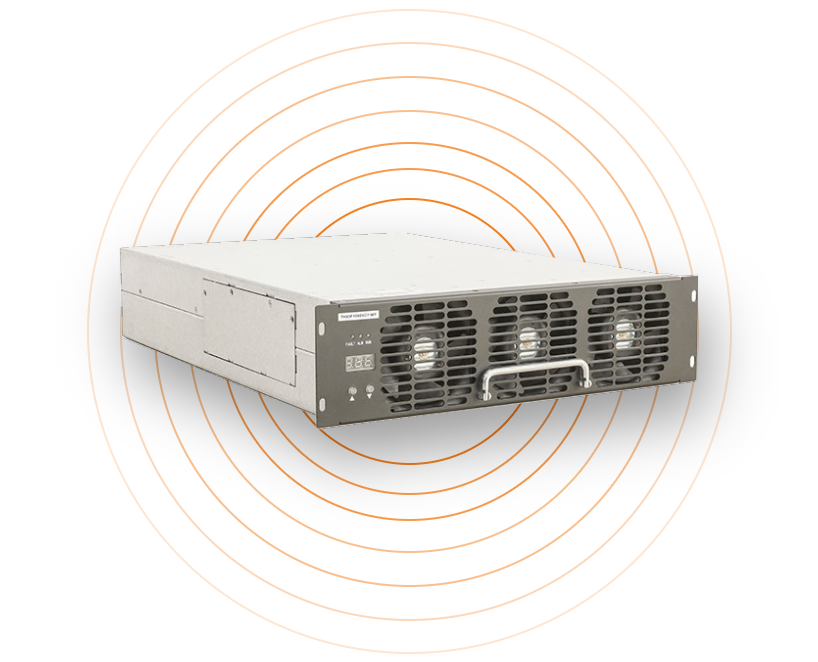
Introducing Bacancy's game-changing 20/30/40kW Power Module for EV chargers – a compact yet robust solution engineered to revolutionize charging systems. With unparalleled power density and wide voltage range compatibility, it offers unmatched flexibility and reliability. Effortlessly integrating with charger controllers via CAN, stacking enables the configuration of EV chargers of 120 kW and higher, enhancing efficiency and adaptability across various charging setups.
Top Quality 20/30/40kW Power Module Manufacturer in India
The Most Trusted Partner for Your EV and EVSE Needs!
Known for tapping into future-proof technology, Bacancy's 20/30/40kW EV DC charger module incorporates advanced technology to meet the evolving needs of electric vehicle charging infrastructure and remain compatible with future innovations and standards.
Bacancy's 20/30/40kW power module for EV charger efficiently dissipates heat, ensuring reliable performance. We are charging the future with our innovation as we offer our 20/30/40kW power module for EV chargers with a silent mode option. The module operates quietly, making it suitable for noise-sensitive environments and nighttime charging sessions.
Bacancy is known for being at the forefront of innovation, and with our EV charger power module, we provide reliable, future-ready technology for your EVSE setup.
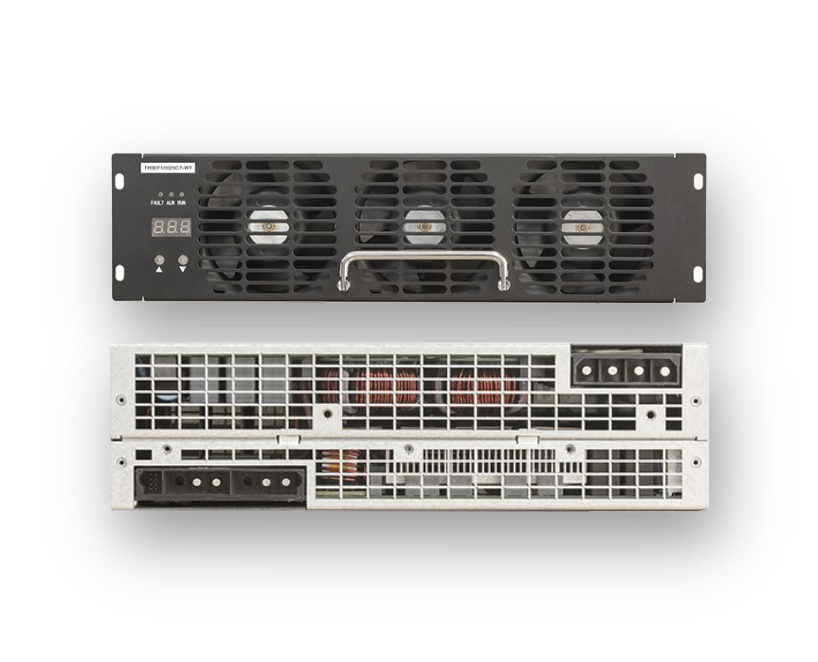
20/30/40kW Power Module
| Technical Specifications | 20kW | 30kW | 40kW | |
|---|---|---|---|---|
| AC Input | Voltage | : 380 VAC ± 10% (3P+N+PE) | ||
| Voltage Range | : 285 to 475 VAC | |||
| Frequency | : 50 Hz | : 50 to 65Hz | ||
| Power Factor | : ≥ 0.99 | |||
| Total Harmonic Distortion (THD) | : ≤ 5% | |||
| DC Output | Voltage Range | : 200 to 1000 VDC | : 50 to 65Hz | |
| Constant Power Range | : 250 to 500 VDC : 500 to 1000 VDC | |||
| Current Range | : 0.5 to 80 A | : 0.5 to 120 A | : 0.5 to 134 A | |
| Power Output | : 20 kW | : 30 kW | : 40 kW | |
| Voltage Regulation Accuracy | : ≤ ± 0.5% | |||
| Current Regulation Accuracy | : ≤ ± 1% | |||
| Current Sharing Imbalance | : ≤ ± 5% | |||
| Peak Efficiency | : ≥ 96% | |||
| Interface | Communication Protocol | : CAN | ||
| Protection | Input Over Voltage Protection | : 490 VAC ± 10% | ||
| Input Under Voltage Protection | : 270 VAC ± 10% | |||
| Short Circuit Protection | : Self-Roll Back Protection | |||
| Environment | Operating Temperature | : -30°C to 75°C (> 55°C Output Derating) | ||
| Storage Temperature | : -40°C to 75°C | |||
| Relative Humidity | : 5 to 95% No Condensation | |||
| Altitude | : ≤ 2000 m, Derating Above 2000 m | |||
| Cooling Method | Cooling Method | |||
| Mechnanical | Address Setting | : Digital Screen Display & Button Operation | ||
| Dimension (L x W x H) | : 460 X 248 X 84 mm | : 437.5 X 336 X 84 mm | ||
| Weight | : < 12 kg | : < 16 kg | : < 20 kg | |
| Other Operational Specs | Mean Time Between Failures (MTBF) | : 500000 Hours | ||
| Standby Power Consumption | : < 10 W | : < 13 W | : < 10 W | |
Power Module 3kW
| Technical Specifications | ||
|---|---|---|
| AC Input | Voltage Range | : 230 VAC ± 10% (P+N+PE) |
| Frequency | : 50 Hz | |
| Current Range | : 19 A | |
| Power Factor | : ≥ 0.99 | |
| Efficiency | : ≥ 96% | |
| Total Harmonic Distortion (THD) | : Half Load not Exceed 8% : Full Load not Exceed 5% | |
| DC Output | Voltage Range | : 43.2 to 58 VDC |
| Current Range | : 0 to 50 A | |
| Power Output | : 3 kW (3000 W) | |
| Peak to Peak Ripple Value | : < 200 mV (Bandwidth: 20 MHz) | |
| Over Voltage Protection | : 61 to 63 VDC Dead Lock (Not Self Recovery) | |
| Load Current Sharing | : ± 3% | |
| Interface | Communication Protocol | : Modbus (RS-485) |
| Protection | Over Temperature Protection | : Minimum 85°C : Typical 90°C : Maximum 95°C |
| Input Over Voltage Protection | : Typical 300 VAC | |
| Input Under Voltage Protection | : Minimum 81 VAC : Maximum 87 VAC | |
| Output Over Voltage Protection | : Minimum 61 VDC : Typical 62 VDC : Maximum 63 VDC | |
| Short Circuit Protection | : Self-Recovery (Power Consumption ≤ 50 W ) | |
| Anti-reverse Connection | : Buit-in | |
| Fuse | : Buit-in | |
| Environment | Operating Temperature | : -10°C to 40°C |
| Storage Temperature | : -40°C to 60°C | |
| Humidity | : 5% to 95% | |
| Altitude | : ≤ 2000 m, derating above 2000 m | |
| Cooling Method | : Fan Cooling | |
| Mechanical | Dimension (L x W x H) | : 248.50 X 132 X 43.5 mm |
| Weight | : 3 kg | |
Get In Touch
Tell us what you're building.
Share a few details about your project — power class, timeline, certifications you need — and our embedded engineers will respond within one business day with a tailored proposal, not a sales pitch.

Email
[email protected]

Phone (Indian HQ)
+91 90160 28817

Corporate House
15-16, Times Corporate Park, Thaltej, Ahmedabad, Gujarat 380059
<24h
Avg response time
90%
Repeat client rate
96%
Project success rate
Start a conversation
Fields marked with * are required. We'll never share your details.
Exploring the Robust Features of the Our Power Module
Compact, Versatile, Future-Ready – Bacancy's 3/20/30/40kW Power Module for EV Charger
Versatile: The 3/20/30/40kW EV charger module is versatile, supporting various energy and EV charger controllers, catering to diverse voltage needs and charging situations.
Space Efficient: Its compact design easily integrates into existing charging infrastructure, suitable for various installation environments.
User-friendly Operations: Its intuitive and user-friendly interface makes it easy for users to adjust settings and monitor charging processes.
Quiet Performance: The option to operate on silent mode makes our EV charger power module perfect for noise-sensitive environments and nighttime charging sessions.
Enhanced Control: With precise control and monitoring capabilities over charging parameters, users can optimize charging efficiency and performance.