
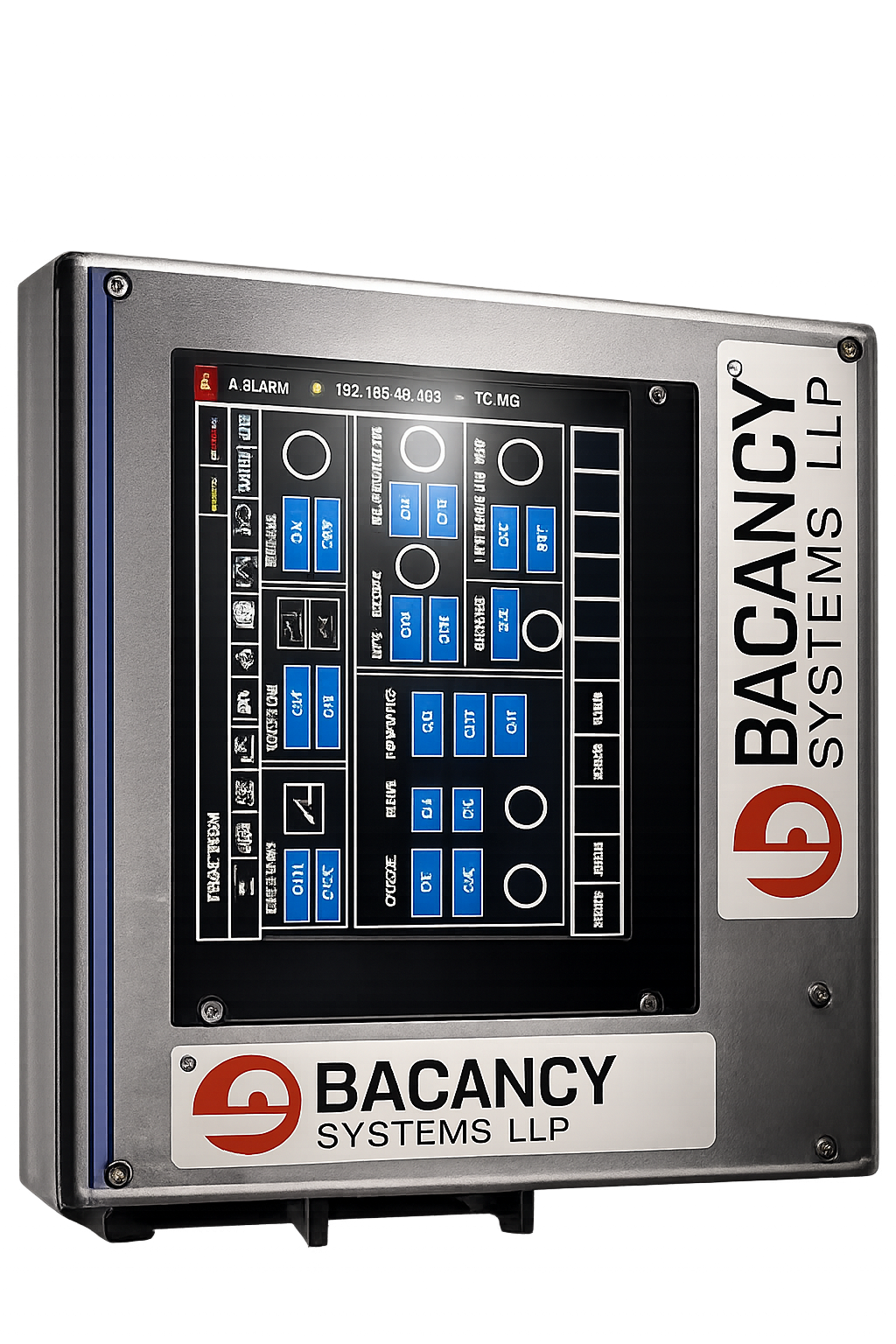
Built for the Cab
Engineered to EN 50155 for the shock, vibration, temperature, and EMC that rail service delivers daily, so the driver's window into the train stays reliable for the life of the rake.


The Bacancy Systems HMI display puts live TCMS data in front of the driver and clear service information in front of passengers, all on a rugged platform engineered to EN 50155 for the shock, vibration, and heat of rail duty. Designed, populated, and tested in-house in Ahmedabad, it connects to the train over Ethernet and TRDP and stays readable when the sun floods the cab.
Every specification here is proven by our own engineers. Bacancy Systems' rolling stock team designs, populates, and tests each board in-house at Ahmedabad, backed by 16+ years of embedded engineering across EN 50155, IEC 61375, and mission-critical rail electronics. It is world-class railway technology, engineered in India and built to serve fleets anywhere.
| Parameter | Specification |
|---|---|
| Standard Compliance | EN 50155 & EN 45545-2 (rolling stock electronics & fire safety) |
| Display Sizes | Multiple diagonal options for cab and saloon duty |
| Brightness | High-brightness, sunlight-readable panel |
| Touch | Projected capacitive touch, glove operable |
| Interfaces | Ethernet | TRDP |
| Front Protection | Sealed front bezel for cab environments |
| Operating Temperature | EN 50155 temperature class |
| Shock & Vibration | EN 61373 |
| Supply Voltage | 24 V DC to 110 V DC nominal, per EN 50155 voltage classes |
| Origin | Designed, populated & tested in-house at Ahmedabad, India |
Years of embedded engineering
Rail & rolling stock products
Facilities in Ahmedabad, India
In-house design & test
A TCMS is only as useful as the screen that shows its data. We engineered the display side of the equation the same way we engineered the control side: standards-first, network-native, and built to outlast the duty cycle.
Engineered to EN 50155 for the shock, vibration, temperature, and EMC that rail service delivers daily, so the driver's window into the train stays reliable for the life of the rake.
A high-brightness, optically clear panel keeps subsystem status and fault alerts legible when sunlight floods the cab, exactly when a driver needs the screen most.
The display connects to the train network over Ethernet and TRDP, surfacing live data from the Bacancy Systems TCMS Unit or a third-party control platform without a translation layer.
Driver cab variants prioritize control and fault visibility, passenger variants carry route and service information, and both share one hardware platform and one supplier.
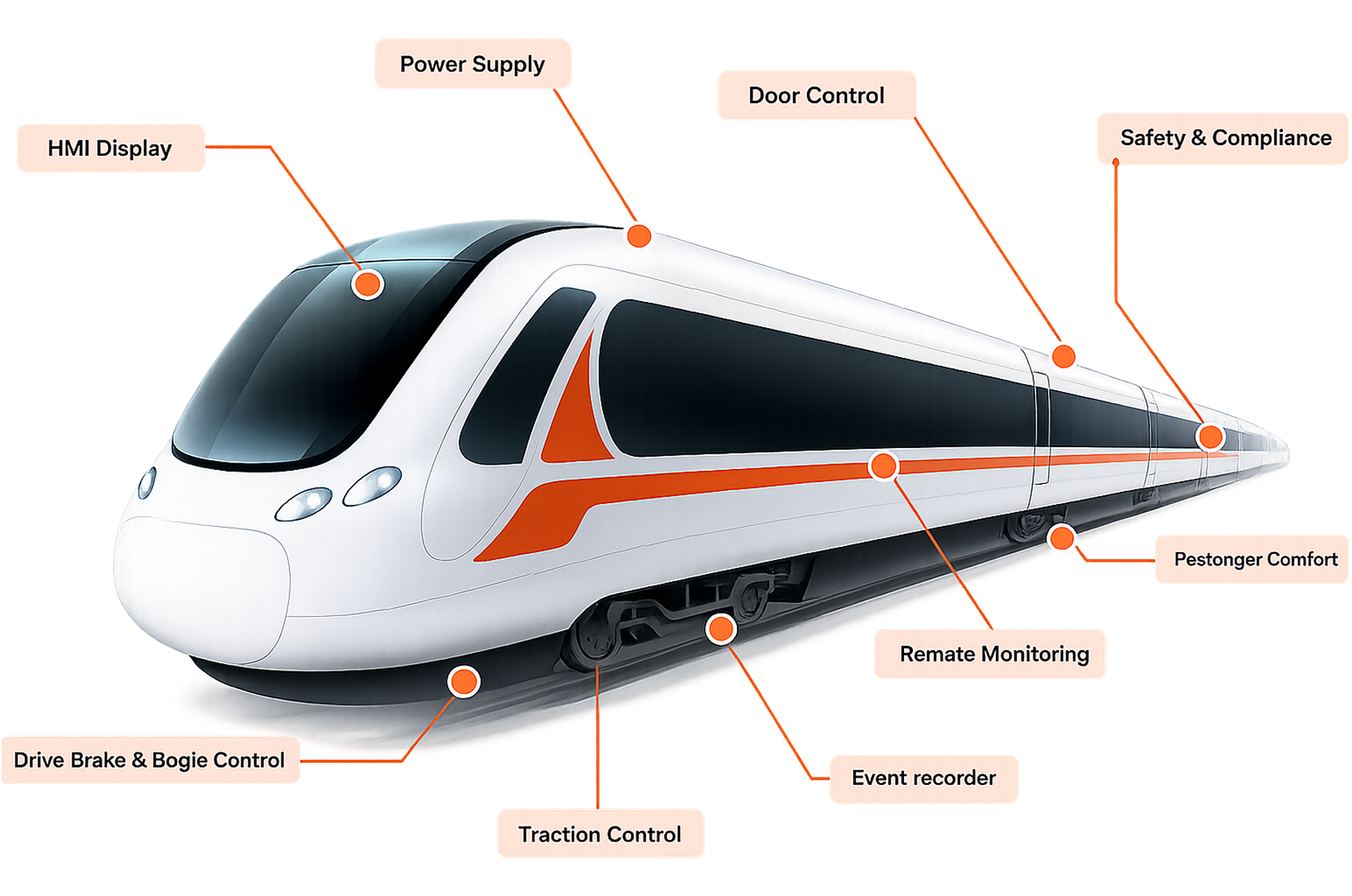
The display joins the Bacancy Systems TCMS Unit, MVB / TRDP module, and validation toolchain, so control, communication, and the screen that shows it all come from one Indian manufacturer.
One display family covers the cab, the saloon, and the depot, and because every variant shares the same rail-grade platform, spares and integration effort stay small across the fleet.
Driver cab HMI for metro, suburban, and mainline stock
Passenger information displays in saloons and vestibules
Depot diagnostic and maintenance terminals
Cab modernization in mid-life retrofit programs
Integration labs and TCMS test benches
Share a few details about your project — power class, timeline, certifications you need — and our embedded engineers will respond within one business day with a tailored proposal, not a sales pitch.

[email protected]

Phone (Indian HQ)
+91 90160 28817

Corporate House
15-16, Times Corporate Park, Thaltej, Ahmedabad, Gujarat 380059
Avg response time
Repeat client rate
Project success rate
Fields marked with * are required. We'll never share your details.
A rail HMI (Human Machine Interface) display is the screen through which the driver monitors and interacts with the train. It surfaces TCMS data such as traction status, brake state, door status, and fault alerts, and in passenger variants it presents route, station, and service information throughout the saloon.
Yes. The display is engineered to EN 50155, the international standard for electronic equipment on rolling stock, covering the temperature, humidity, shock, vibration, and EMC conditions of rail service.
Yes. The display connects to the Train Control and Management System over the train network, so drivers see live subsystem status from the same platform that controls the train. It also integrates with third-party TCMS platforms over standard train communication interfaces.
The platform supports both duties. Driver cab variants prioritize control interaction and fault visibility, while passenger information variants present route and service content, so one display family covers the whole train.
Every board is designed, populated, and tested in-house at Bacancy Systems' facilities in Ahmedabad, India. It is a Make in India product backed by 16+ years of embedded engineering experience.
The EN 50155 engineered control brain that monitors and commands rolling stock subsystems.


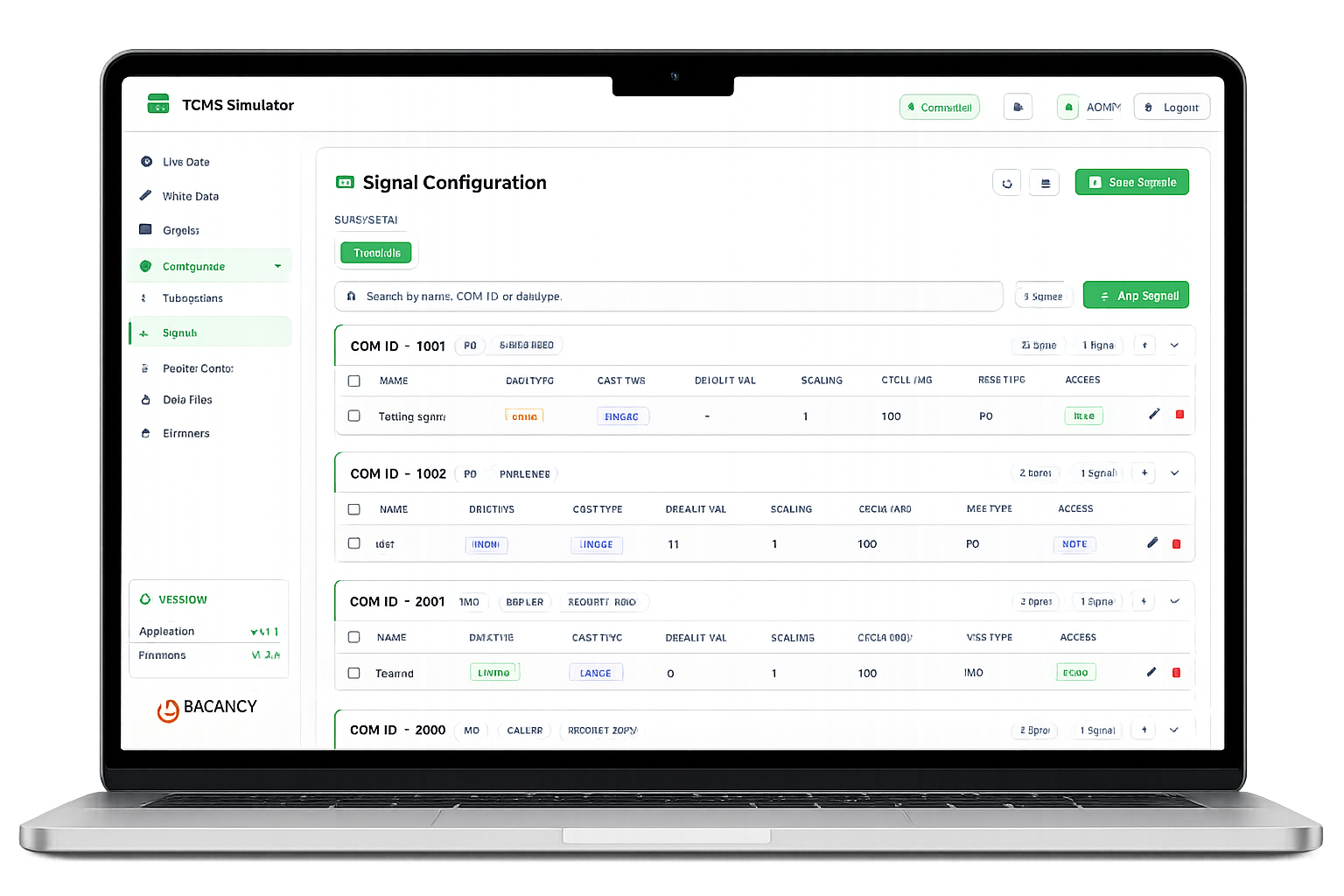
Recreate train subsystems on the bench and validate control logic before rollout.
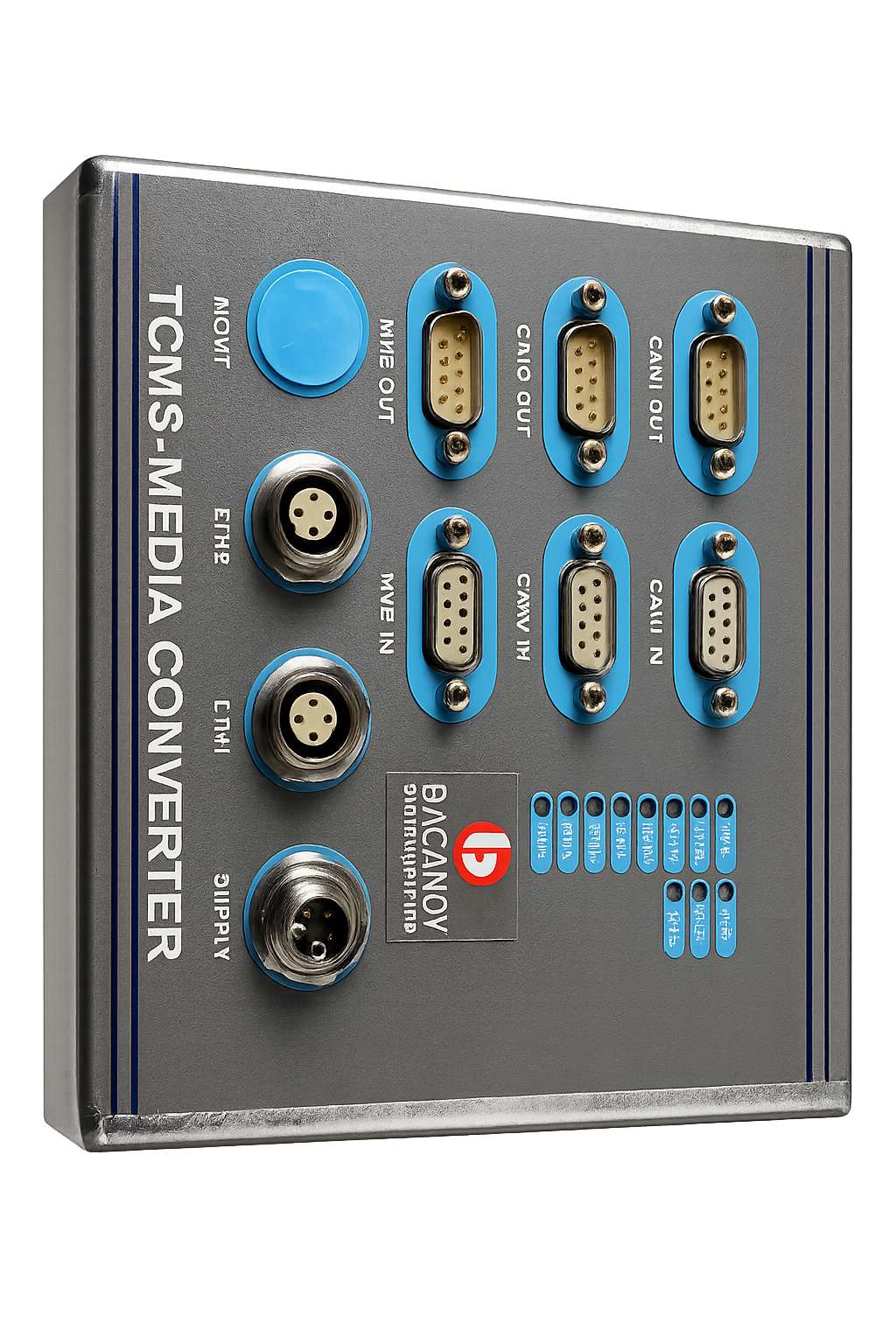
Bridge the Multifunction Vehicle Bus and Train Real-time Data Protocol across the consist.
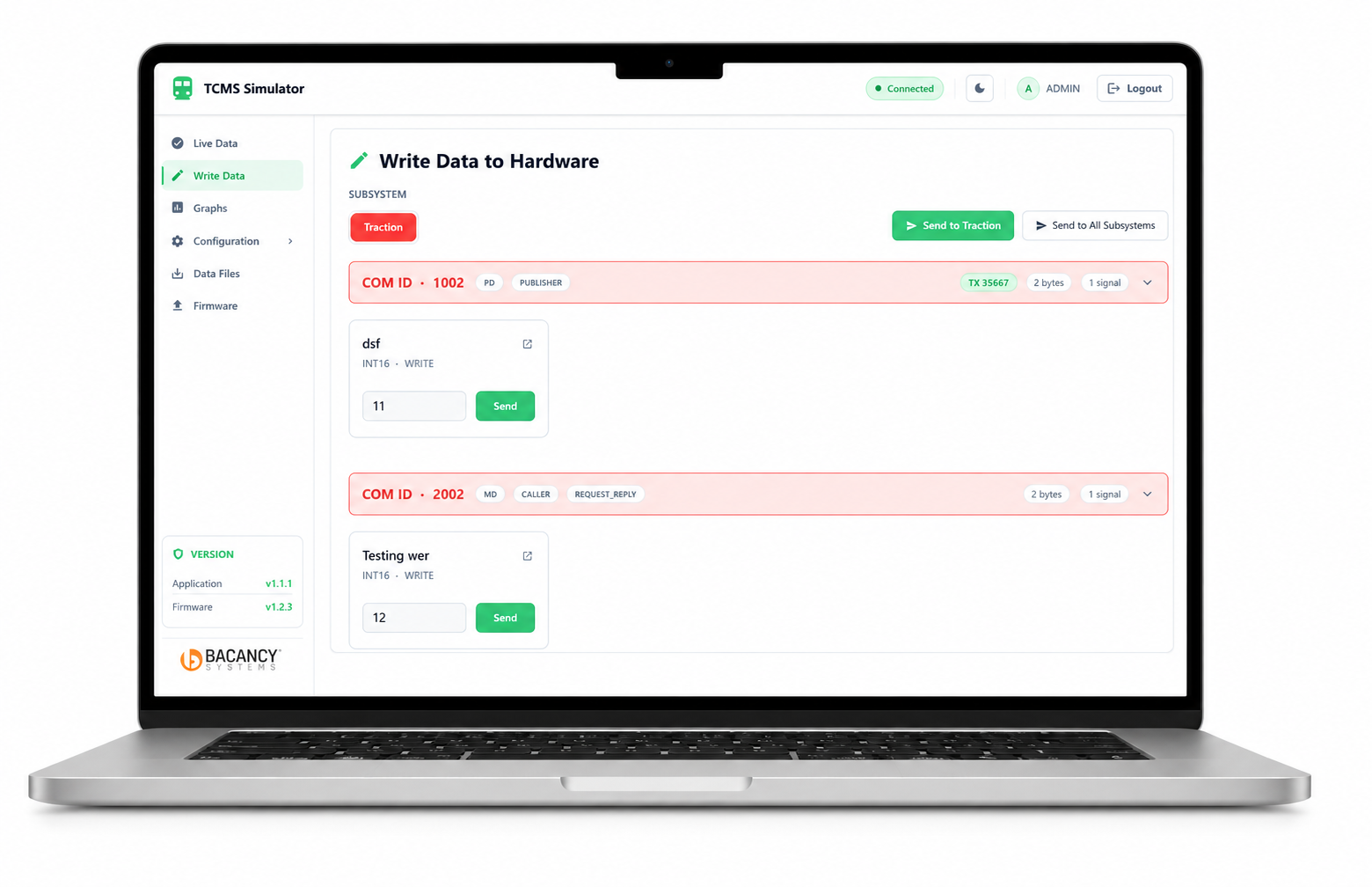
Verify Train Real-time Data Protocol communication across every node on the train network.
The black box of the train, logging journey and subsystem data for diagnostics and review.
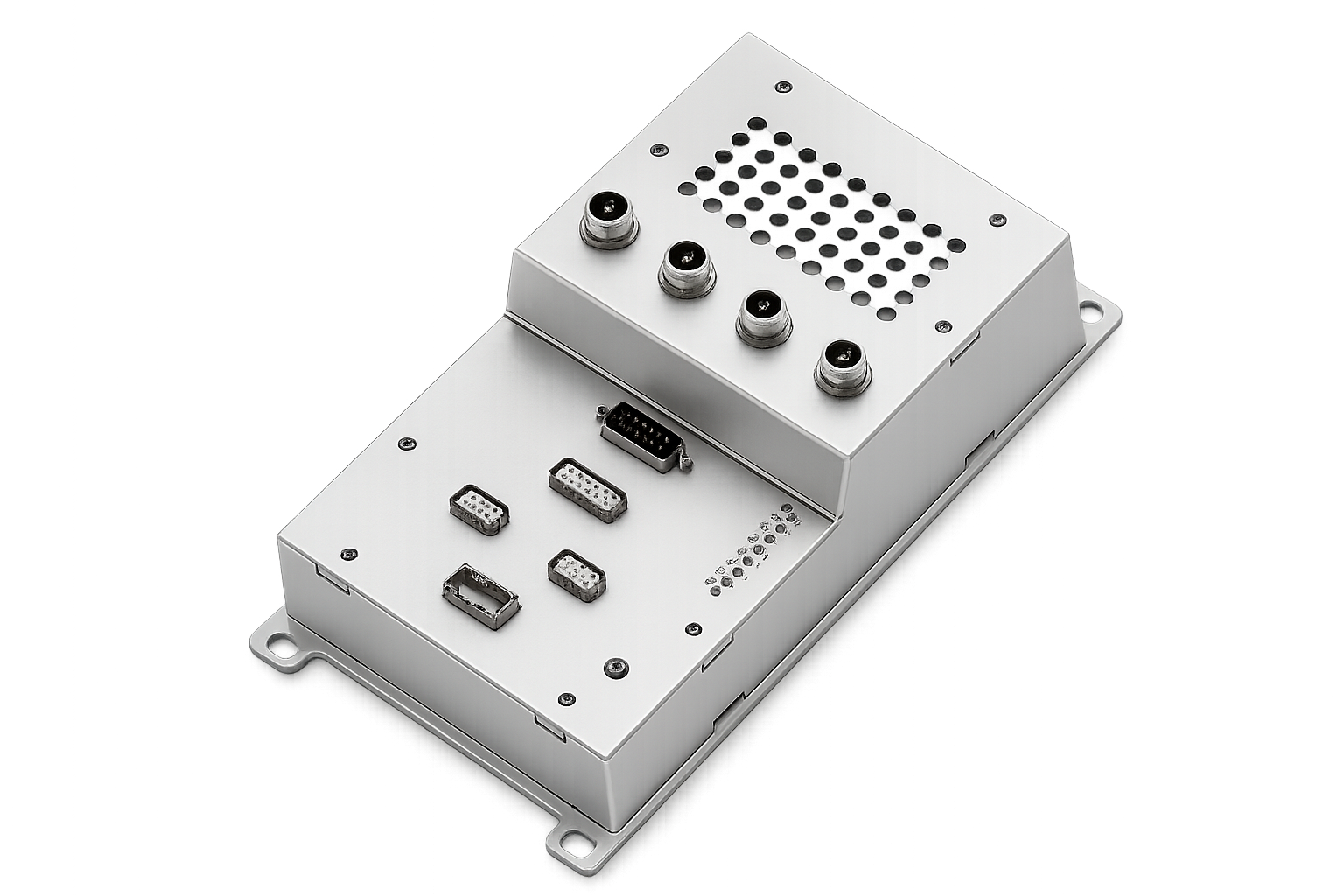
Stream live fleet health data from train to depot for predictive maintenance.
EN 50155 engineered electronics managing drive and braking effort across the train.





Share your size requirements, mounting constraints, and TCMS interface, and our rolling stock engineers respond within one business day with a tailored proposal, not a sales pitch.
Get the Best Quotation