





 Blog
Blog

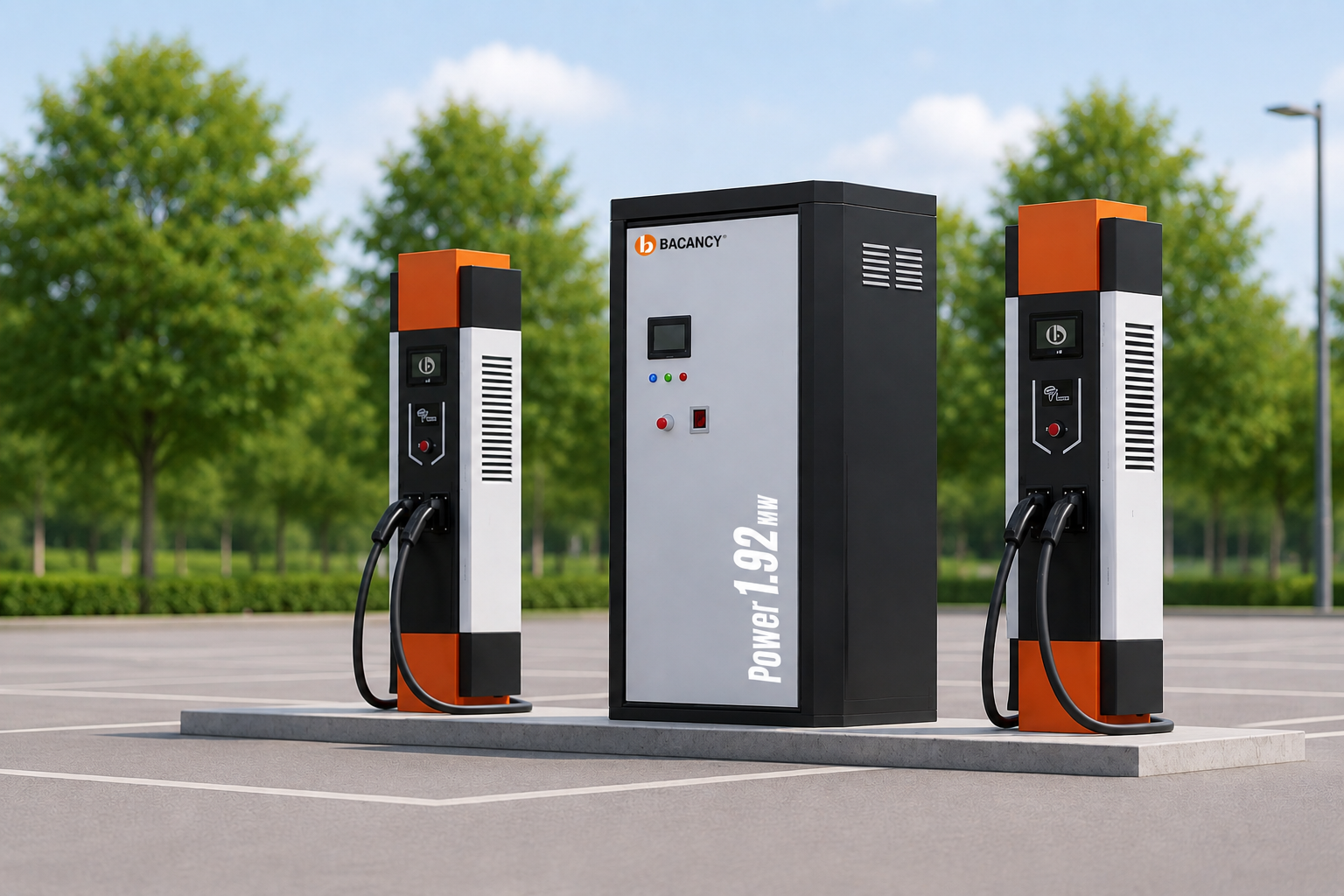
Distributed Charging System
Engineered for scalability, intelligence, and seamless integration across modern EV ecosystems, Bacancy’s Distributed EV Charging System is purpose-built for high-demand fleet, depot, and public charging environments. Also referred to as an EV charging dispenser or DC charge dispenser, the system separates power generation from delivery to enable intelligent load sharing, higher uptime, and efficient multi-vehicle charging. Designed to support today’s fast-charging needs and tomorrow’s megawatt-scale requirements, it provides a future-ready foundation for large-scale EV infrastructure deployments.
Why Choose the Bacancy Distributed Charging System
Build a flexible, efficient, and future-ready EV charging ecosystem engineered by Bacancy’s EV innovation team. Our distributed EV charging system supports multiple vehicles charging simultaneously while delivering maximum uptime, energy optimization, and robust safety.
Talk to Our Expert

Fast & Efficient DC Charging
Bacancy’s smart CCS2 charger controller-based architecture delivers ultra-high power with up to 1.92 MW. Designed for rapid turnaround and optimized fleet utilization, ensuring scalable and future-ready EV charging.
Scalable Architecture
Effortlessly expand your charging footprint—Bacancy’s modular, distributed controller setup supports multi-station, multi-vehicle environments across campuses, warehouses, and mobility hubs.
Smart Connectivity & Real-Time Monitoring
Integrated with CAN, Modbus, Ethernet, WiFi, and 4G, the Bacancy system ensures continuous communication, remote diagnostics, and centralized monitoring for reliable operations.
Safety-Compliant & Robust Design
Equipped with full-spectrum electrical, thermal, and fault protections including shock, earth, surge, over/under-current, overvoltage, residual current, earth-fault monitoring, phase-reversal detection, temperature monitoring, and emergency shutdown—for uncompromised operational safety.
Energy-Efficient Charging Management
Optimize energy usage with Bacancy’s dynamic load balancing and intelligent distribution logic, lowering operational costs while improving charging performance.
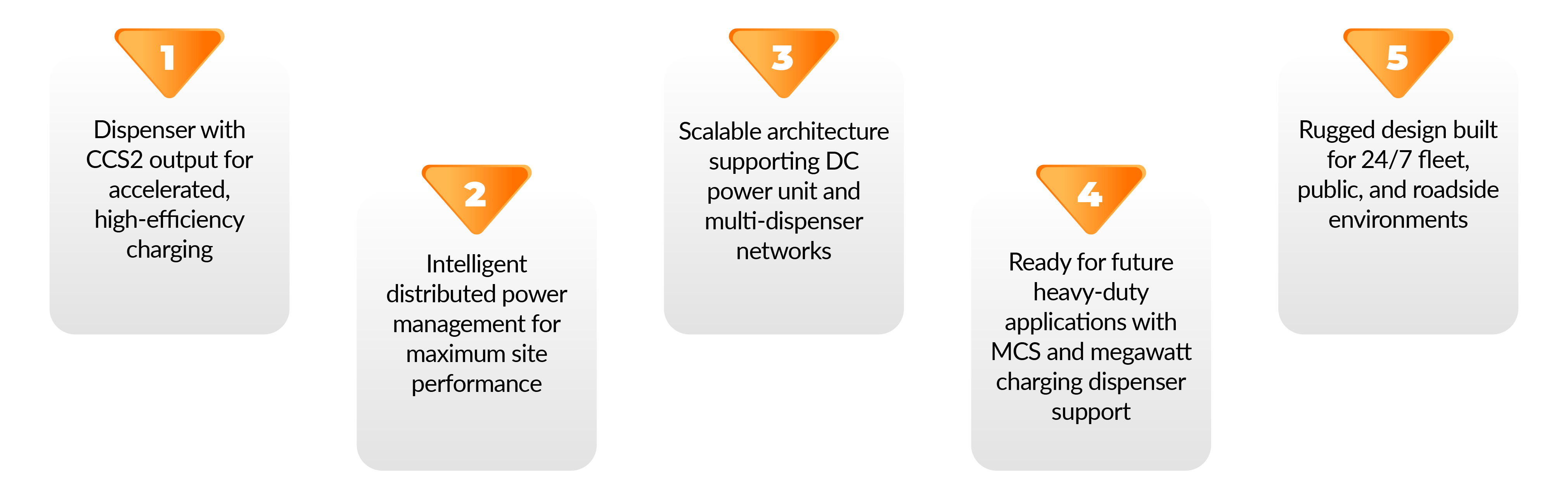
Key Capabilities
Get In Touch
Tell us what you're building.
Share a few details about your project — power class, timeline, certifications you need — and our embedded engineers will respond within one business day with a tailored proposal, not a sales pitch.

Email
[email protected]

Phone (Indian HQ)
+91 90160 28817

Corporate House
15-16, Times Corporate Park, Thaltej, Ahmedabad, Gujarat 380059
<24h
Avg response time
90%
Repeat client rate
96%
Project success rate
Start a conversation
Fields marked with * are required. We'll never share your details.
Bacancy Distributed Charging System – Technical Overview
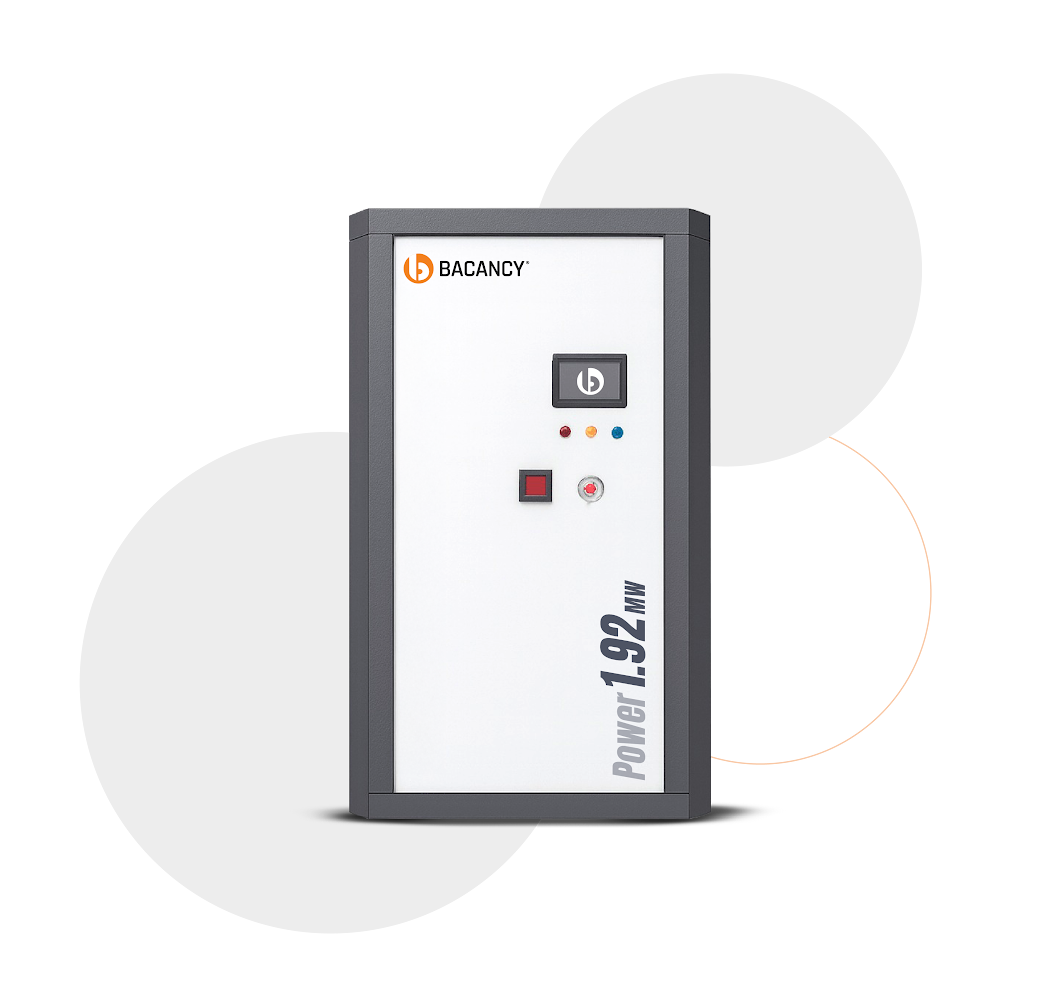
Power Unit (Central Unit)
Our system separates power conversion from charging delivery:
Integrates the power module stack, DC output section, and controller into a single enclosure.
Dynamically allocates power to connected dispensers based on real-time demand
Centralized cooling, safety systems, and monitoring
| Technical Specification | Power Unit |
|---|---|
| Input Voltage | 400 VAC ± 10% (3P+N+PE) |
| Frequency | 50Hz ± 10% |
| Output Voltage | 100 to 1000 VDC Constant Power 300 to 1000 VDC |
| Output terminal | Up to 12 Nos. |
| Protection | Electric Shock Protection | Earth Protection | Surge & Short Circuit Protection | Overcurrent & Under Current Protection | Overvoltage & Residual Current Protection | Input & Output Earth Fault Monitoring | Over Temperature Protection (Device & System-Level) | Emergency Shutdown with Audible/Visual Alarm |
| Electrical connection | DC Power Cable: 2 × 150 mm² Per Pole, Per Vehicle Connector Terminal | Power Supply Cable: 230 VAC, Single-Phase with 2.5 mm² Wire | Communications Cable: 2-Core Twisted Pair and Shielded |
| Communication protocol | OCPP 1.6j (Upgradeable to OCPP 2.0.1) |
| Network | Ethernet / WiFi |
| Display | HMI with Android User Interface |
| Standards | IEC 61851-1 | IEC 61851-23 | IEC 61851-21-2 |
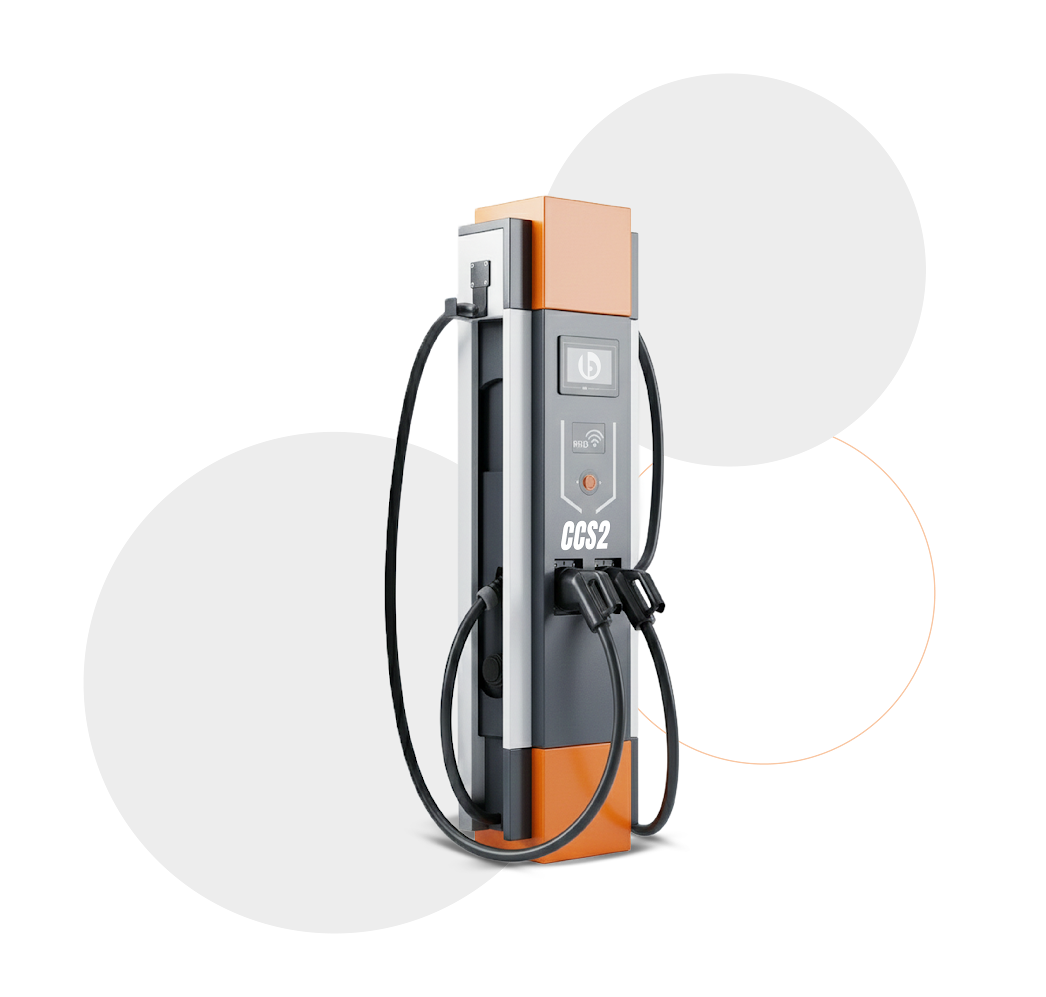
Dispenser Units (Spiller Units)
Lightweight user interface points
Easy installation with simple power and communication cables
Weather-resistant, compact design (IP54)
| Technical Specification | CCS2 Dispenser Unit |
|---|---|
| Input Voltage | 230 VAC ± 10% (P+N+PE) |
| Frequency | 50Hz ± 10% |
| Output Voltage | ≤ 1000 VDC |
| Output terminal | Up to 12 Nos. |
| Protection | Electric Shock Protection | Earth Protection | Surge & Short Circuit Protection | Overcurrent & Under Current Protection | Overvoltage & Residual Current Protection | Input & Output Earth Fault Monitoring | Over Temperature Protection (Device & System-Level) | Emergency Shutdown with Audible/Visual Alarm |
| Electrical connection | DC Power Cable: 2 × 150 mm² Per Pole, Per Vehicle Connector Terminal | Power Supply Cable: 230 VAC, Single-Phase with 2.5 mm² Wire | Communications Cable: 2-Core Twisted Pair and Shielded |
| Communication protocol | OCPP 1.6j (Upgradeable to OCPP 2.0.1) |
| Network | Ethernet / WiFi / 4G LTE (fall back to 2G) |
| Display | HMI with Android User Interface |
| Standards | IEC 61851-1 | IEC 61851-23 | IEC 61851-21-2 |
How the Bacancy Distributed Charging System Works
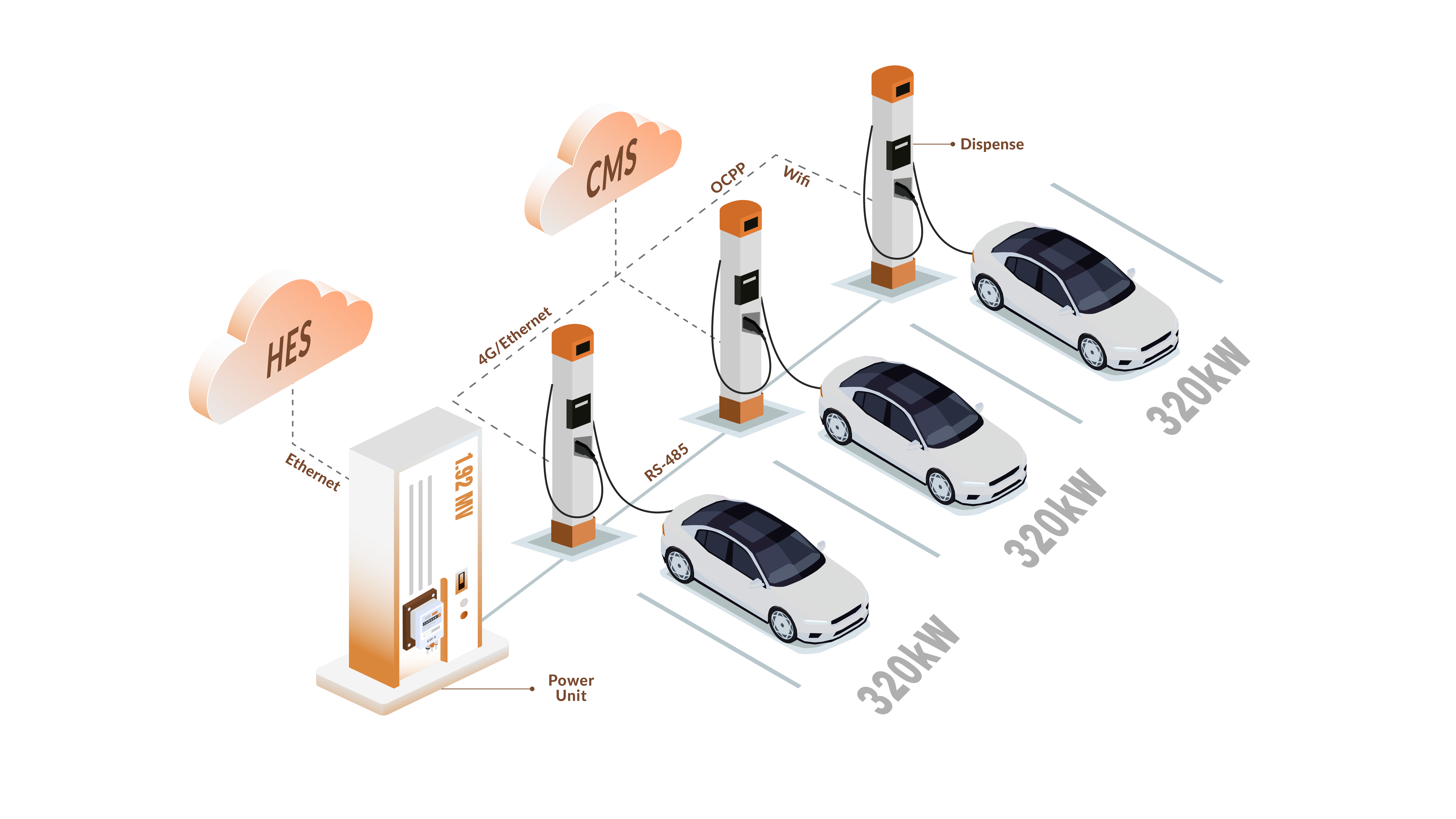
Smart, Modular, Connected
Bacancy’s Distributed Charging System is built on a modular architecture where power is intelligently allocated, monitored, and controlled across multiple charging points. Each stage ensures reliability, safety, and efficiency across the entire charging network.
Power Distribution Setup
Energy is supplied from a central AC or DC source and routed to distributed power modules or nodes.
Energy enters the system from a central AC grid connection and is converted to DC in the Central Power Unit. From there, DC power is distributed to multiple dispensers.
Bacancy’s system uses centralized AC input with distributed DC output to minimize conversion losses.
Each output node regulates its parameters based on vehicle requirements and available power, while multi-port scalability supports dozens of vehicles charging simultaneously.
Advanced load-sharing logic ensures optimal power distribution during peak demand.
Outcome: High-efficiency power delivery that maximizes energy utilization while maintaining stable charging across multiple vehicles.
Intelligent Controller Integration
Each dispenser is managed by a Bacancy CCS2 Charger Controller responsible for charging logic, communication, and safety.
Controllers optimize voltage and current based on battery chemistry and OEM specifications, support BMS handshake and CAN communication for real-time parameter exchange, handle safe start/stop, fault detection, and thermal management, and enable plug-and-play expansion of additional ports without redesigning the entire system.
Outcome: A reliable, intelligent charging network that scales cleanly as your portfolio grows.
Secure Vehicle Authentication
Before charging starts, each session goes through secure authorization.
The system supports RFID card-based authentication for fleets and shared mobility, optional mobile app-based authentication for consumer/public use.
All charging sessions are securely recorded for billing, usage analytics, and audit compliance.
Outcome: Controlled access, traceable usage, and secure monetization.
Smart Charging & Power Management
Once authenticated, charging begins under intelligent control of Bacancy’s power management engine.
Dynamically adjusts current to match battery SOC, temperature, and health data.
Balances power across all active nodes to avoid overload.
Supports priority-based charging, useful for fleets needing faster turnaround.
Monitors real-time faults such as overcurrent, undervoltage, overheating, and instantly responds.
Integrated algorithms ensure low energy loss and consistent DC output.
Outcome: Faster, safer charging with optimized energy consumption.
Monitoring, Analytics & Alerts
Every charging node continuously communicates with Bacancy’s cloud dashboard (or local server).
Tracks power consumption, charging time, errors, and vehicle parameters.
Provides operators with historical data trends and live charging status.
Generates automated alerts for preventive maintenance.
Supports remote configuration, including firmware updates and performance tuning.
Enables fleet-level insights like charge cycles, battery performance, and utilization metrics.
Outcome: Complete visibility and control of your charging network at all times.
Edge Intelligence & Redundancy (Advanced Feature)
Bacancy’s controllers are equipped with embedded logic to ensure network resilience.
Local fallback mode ensures charging continues even during network outages.
Fault isolation prevents a defective port from affecting the larger network.
Distributed intelligence improves uptime in multi-port installations.
Supports redundant communication channels (Ethernet → WiFi → 4G).
Outcome: Highly reliable system with near-zero downtime.
Modular Expansion & Future-Proof Design
Bacancy’s architecture is built to evolve with your scaling needs.
Add charging ports without changing base infrastructure.
Upgrade controllers or power modules independently.
Future-ready for AI-based load forecasting and advanced fleet analytics.
Supports upcoming vehicle categories and battery technologies.
Outcome: A charging network that grows with your business.
Get a Custom Quote - Tailored solutions for bus depots, logistics fleets, commercial properties, and public charging operators.